
What's the safest power strip option
In the realm of surge protection, it is crucial to navigate the landscape of marketing hype and misinformation,
particularly when it comes to plug-in surge protectors.
Let's examine the facts, dispel any myths, and establish the most effective measures to ensure the safety of
your electronic devices.
In order to increase the likelihood of surge damage, it is recommended that a surge protector be placed next
to the appliance. It is evident to anyone with the relevant expertise that this is an erroneous assumption.
For instance, if a 5,000-volt surge were to enter your home through a hot wire, the consequences could be
significant. It is important to note that, in contrast to a typical plug-in protector, which has a let-through
voltage of 330 volts, this appliance allows 5,000 volts to flow unimpeded into the appliance. This approach
does not address the underlying cause of the surge; it merely redistributes it to an alternative area.
However, the omission of this critical detail, namely the fact that these surge protectors do not offer effective
protection against serious surges, is likely driven by a desire to maintain profit margins.
True surge protection has been proven effective for over 100 years. The most effective method of protecting
your building from surges is to ground the surge before it enters the building.
This involves the installation of a Type 1 or Type 2 surge protector (at a cost of approximately $1 per
appliance) and ensuring it is properly grounded. This ensures that hundreds of thousands of joules of surge
energy are harmlessly absorbed by the earth outside, thus preventing any damage to your indoor electronics.
Plug-in surge protectors, by contrast, have a maximum capacity of 1,000 joules of surge energy, which is
insufficient to handle a lightning strike (which can reach 20,000 amps). Furthermore, they pose a significant
fire hazard, which is why cruise lines have implemented a policy of confiscating any plug-in surge protectors
found in guests' luggage.
The key point to note is that… All electronic devices are already equipped with the highest levels of
protection. The primary concern is the rare, transient surge (occurring approximately once every seven years)
that can overwhelm this internal protection. It is imperative to ground a Type 1 or Type 2 protector outside
the home to prevent surges and ensure the integrity of the appliances' built-in protection.
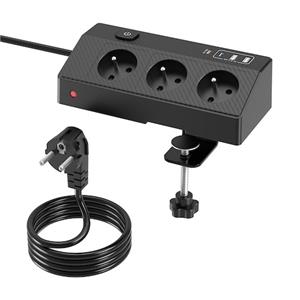
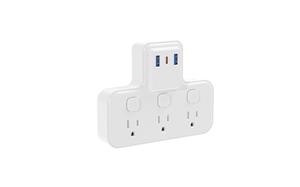
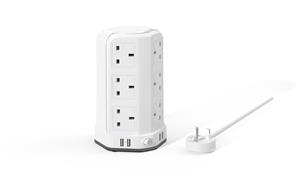
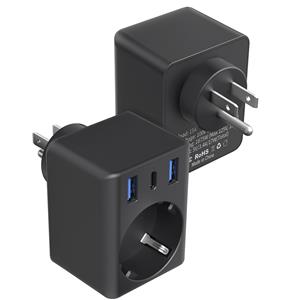
So, what's the safest power strip option? The rules are different in each area, but the basic idea is the same:
a simple, reliable circuit breaker and compliance with local safety certifications. In North America, the
standard is a 15-amp circuit breaker with a UL 1363 listing. This is the key safety certification for power
strips in the region. In Europe, the most common circuit breaker is rated at 16 amps.
This matches the European standard for circuit breakers (EN 60898) and the CE marking
(IEC 60884 AND IEC62368). In both regions, the safest power strips have no surge protector components.
They're cheaper, avoid fire risks, and don't give you a false sense of security.
Don't fall for the marketing hype.
Make sure you're protected against ground surges, and choose simple, safe power strips.